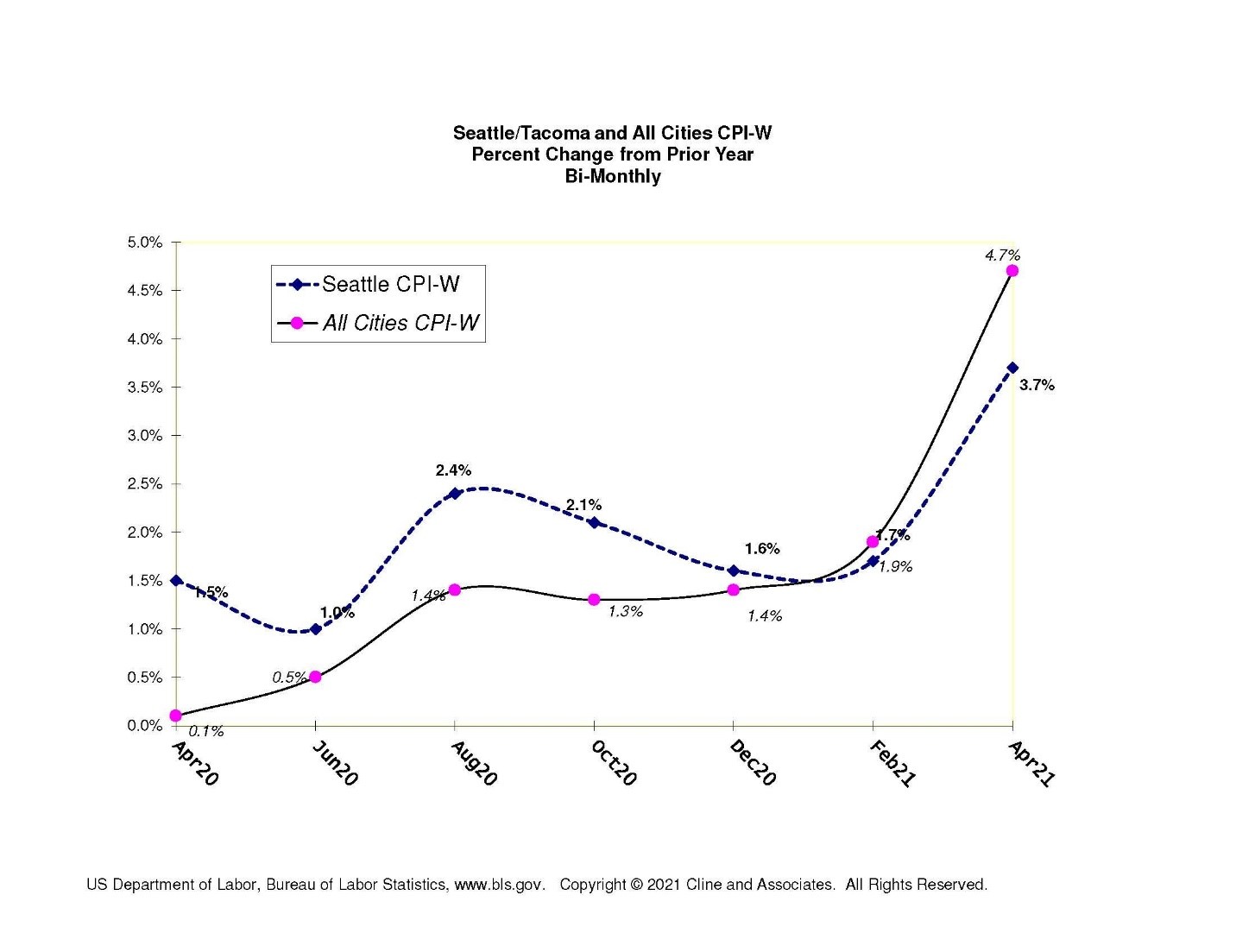
In the last two articles in this series, we discussed recent and projected CPI. We have described the recent spikes in inflation as well as economist predictions that inflation will start to taper off.
In the last Newsletter article in this series, we updated you on recent inflation numbers. This included a surprisingly large jump in the inflation reported in June, followed by a modest decline in July. Do the July numbers indicate that we’ve turned a corner? If so, how far can we expect the CPI to drop? That’s the topic that we turn to today.
Earlier this month we presented a webinar covering recent inflation and contract settlement trends with a focus on what lies ahead for groups currently in negotiations or planning to start them soon. The webinar and transcript are available on our Premium Website. This article is the first of a series on these issues.
The latest CPI report continued to show high inflation numbers, even higher than the previous set. But inside those numbers were signs that the predicted slow down in inflation may lie ahead. The Seattle 12-month through April to April “W” index was reported at an eye-popping 8.1%. The All Cities index was even higher at 8.6%:
In the last two newsletters, we reported on the surprisingly sharp rise in inflation and how that development and the uncertainty in future inflation predictions would have a potentially large impact on wage negotiations. The jump in inflation suggests rising settlements but other developments likewise support our prediction that settlements for 2022 (and 2023) will be heading up.
In our last Newsletter, we report on the just-released June CPI numbers. As we indicated, while we had expected a sharp rise, the size of the rise caught us (and most economists) by surprise. The June national and Seattle indices exceeded 6% as did other regional CPI measures.
The “All-Cities” index is published monthly and the “Seattle” and other regional indices are published every other month but of all those reports, it is the “June” numbers that are the most watched for their potential impact on contract negotiations. While some CBAs look towards the inflation report for different months, the vast majority of contracts that specifically apply CPI use the June numbers because they come out in mid-July about the time most negotiations are launching.
Spring Blip. For some time, we had been predicting a bump in the upcoming Spring CPI numbers. As the April and May numbers materialized, that prediction proved accurate. The question now is what lies ahead.
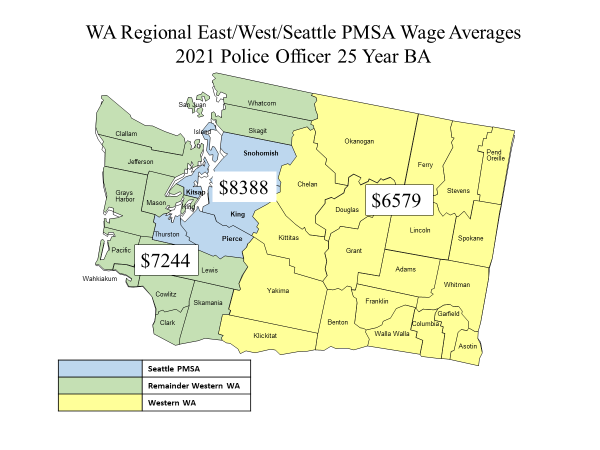
In the previous two articles in this wage series, we discussed the extent to which population and assessed valuation correlated with wage rankings. In this article, we discussed geographic location and the effect of various labor markets on public safety wages.
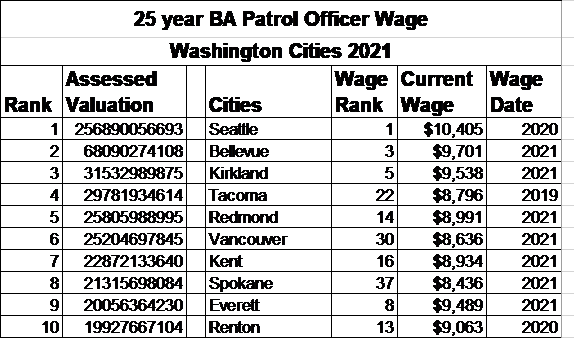
In the last issue we discussed whether – and to what extent — population influenced a jurisdiction's relative wage ranking. In this article, we discussed to what extent assessed valuation influences that ranking.