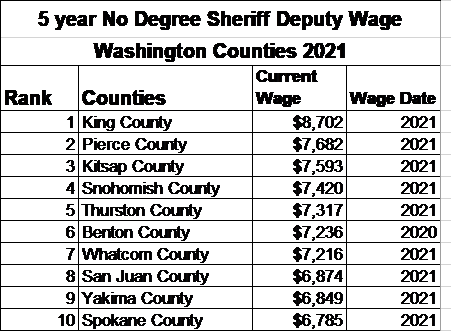
In part 6 of our ongoing wage series, we now turn to the rankings of County Deputy and City Police Officer rankings throughout the State. This series always produces both expected and unexpected information about the relative standing of jurisdictions.
A year unlike any other, health care has been at the center of our attention. What does that mean for insurance costs going forward? Always an important part of the negotiated total compensation, we’re also paying attention to the trends in health care costs.
If you are in or soon entering bargaining, right now it is critical to tracking economic developments and also reviewing the month to month sales tax numbers, in a way that it has never been before. If you are in or soon to be in contract bargaining, expect that the budget and the general state of the economy will loom large as points of discussion.
If you are in or soon entering bargaining, right now it is critical to be reviewing the month to month sales tax numbers, in a way that is has never been seen before.
In the previous two articles in this wage series, we discussed the extent to which population and assessed valuation correlated with wage rankings. In this article, we discussed geographic location and the effect of various labor markets on public safety wages.
In the last issue we discussed whether – and to what extent — population influenced a jurisdiction's relative wage ranking. In this article we discussed to what extent assessed valuation influences that ranking.
In last three parts of the wage series we have discussed State wage rankings for the various public safety classifications. In the next part of the wage series we run our series of articles on factors that might influence or explain, at least in part, those wage rankings, with updated 2016 wage rankings.
This is part 6 of our continued series on Washington public safety employee wages. In this issue we report on wage rankings for 911 dispatchers and police records clerks.