In our last blog, we reported the significant drop in inflation reported in the October CPI report. With current CPI standing at 0.8% and 0.6% for the “All-Cities” and Seattle index, respectively, how might this sudden drop affect bargaining?
Just last month, we noted that inflation appeared to be “trending downward” at that inflation at 2% or less might be the “new normal.” This week’s CPI report further reflects that downward trend.
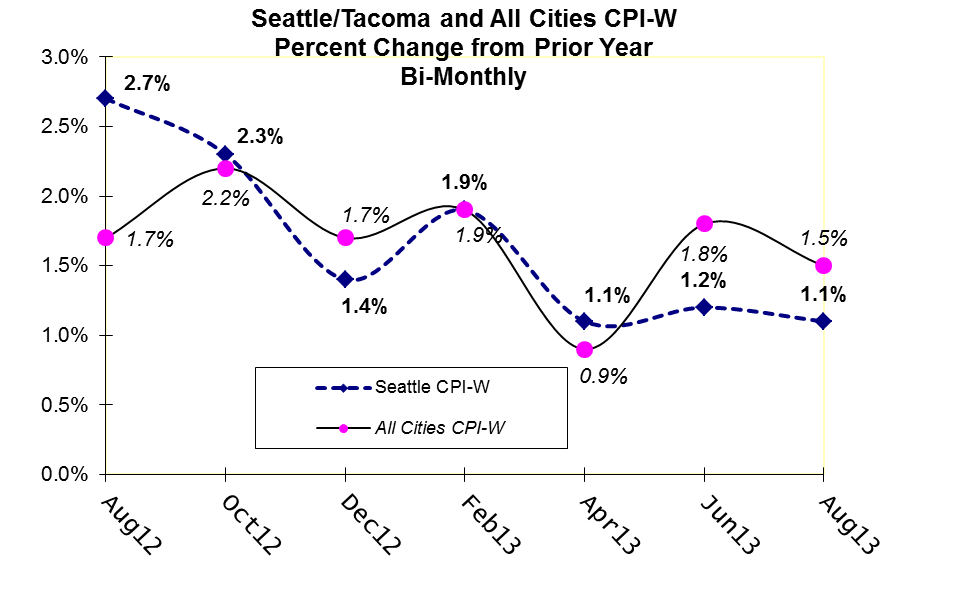
As we had suggested in our last article on inflation trends, inflation seems to be trending downward. The CPI numbers confirm that trend. The latest inflation report both for Seattle and All-Cities is sub-2% and other recent inflation projections suggest that trend might continue. The recently released August CPI numbers report the National inflation index (All-Cities-W) at 1.5% and the Seattle-W even lower — 1.1%. A year ago, the corresponding were 1.7% (All-Cities) and 2.7% (Seattle).
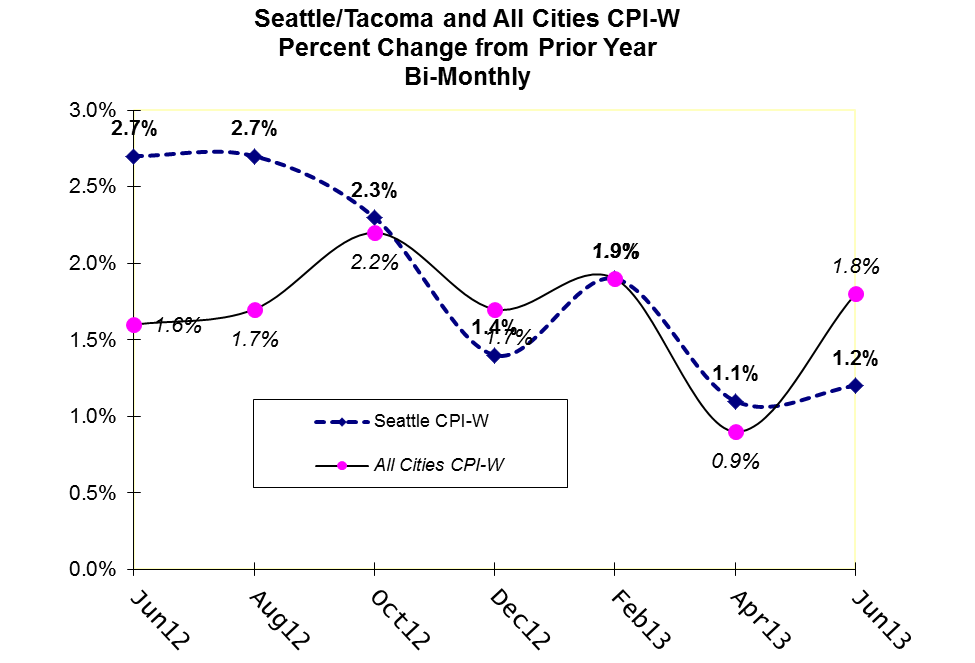
The just-released June CPI numbers show that inflation continues to be low. The Seattle CPI-W index came in at 1.2% up 1/10 of a percentage from April but down from 2.7% from last June. The All-Cities index came in at 1.8%, up from 0.9 in April and slightly up from last June’s 1.6%. This graph shows the movement over the past year.
The November national inflation number, as reported by the All Cities CPI-W dropped to 1.7%, a full half percent below the October report for the same Index (2.2%). The All Cities CPI-U was reported at 1.8%. (These indices report inflation as measured over 12 months). According to the Bureau of Labor Statistics report, the drop of inflation is almost entirely attributable to a decrease in gas and energy prices.
We often are asked, what the “Seattle” CPI is and whether it only covers the City of Seattle, or King County. In fact, the “Seattle” index covers the entire Seattle metropolitan area. There is no requirement that you be in, or near “Seattle” to rely upon the Seattle index. In fact, you do not need to be in the Metropolitan area covered by the index, to justify its use. Even Eastern Washington jurisdictions likely have comparables that depend on the Seattle index for inflation adjustments, so tying those contracts into the Seattle index is the surest way to ensure that they keep pace with their Western Washington comparables.
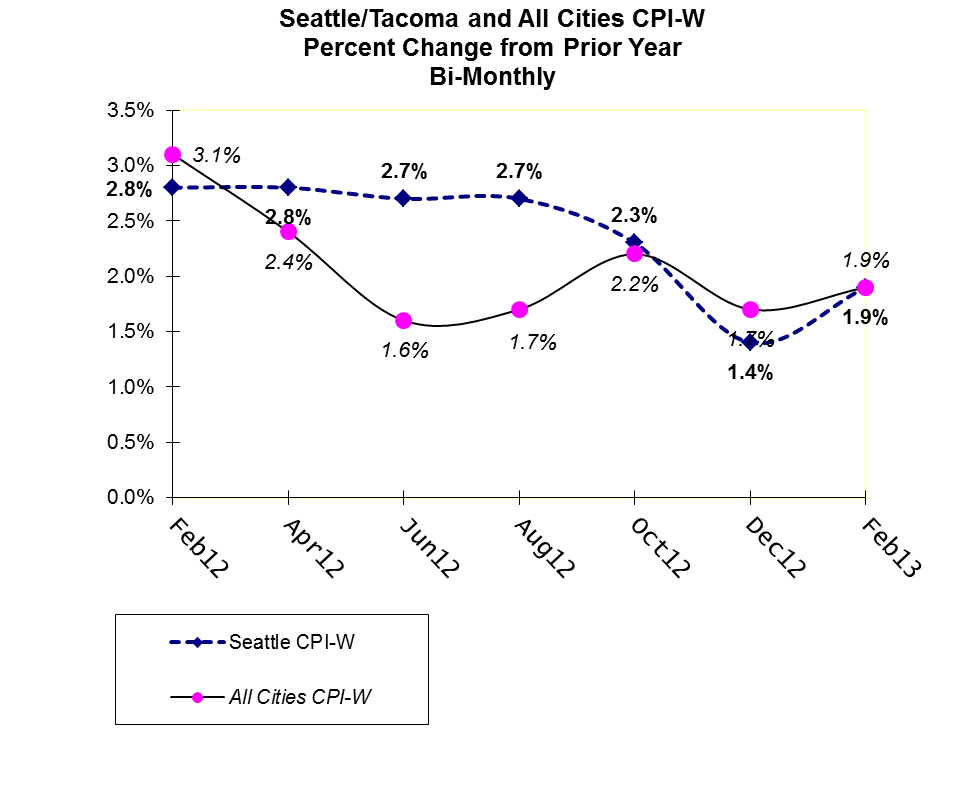
In our last inflation report, the August bimonthly Seattle-W CPI index was a full percentage point above the All Cities-W (2.7% versus 1.7%). However, the latest bimonthly CPI release shows a convergence of the two indices. The October Seattle W has dropped to 2.3% while the All Cities-W has risen to 2.2%:
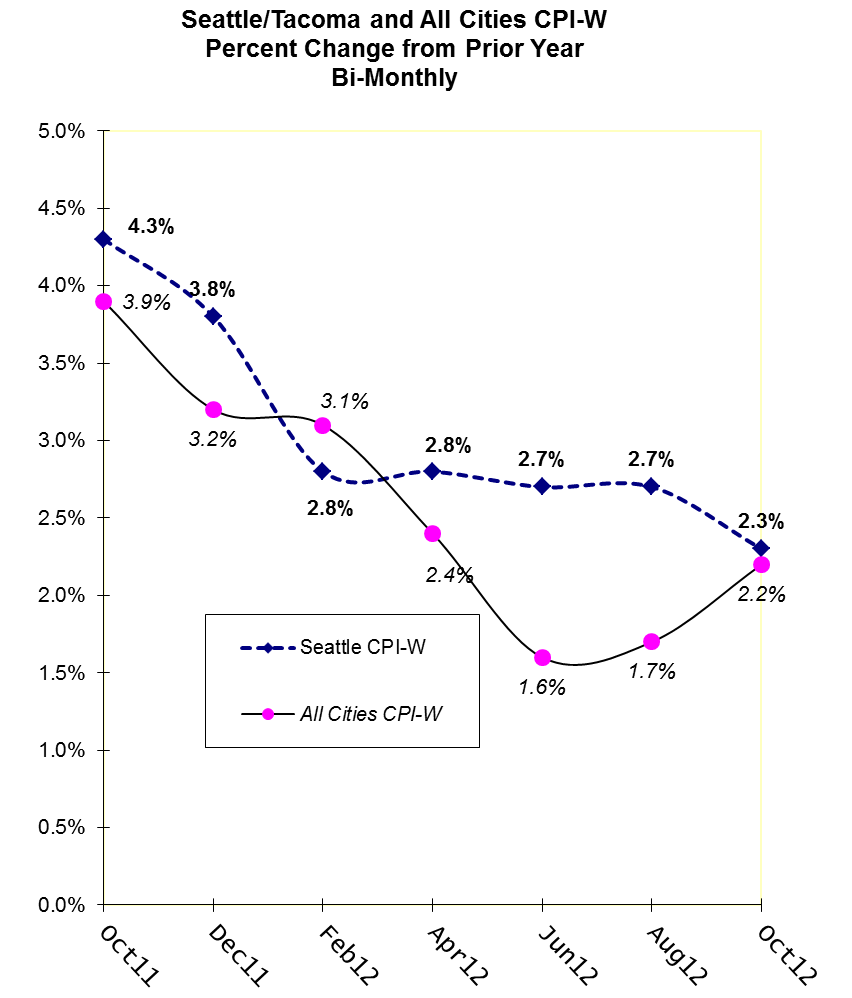
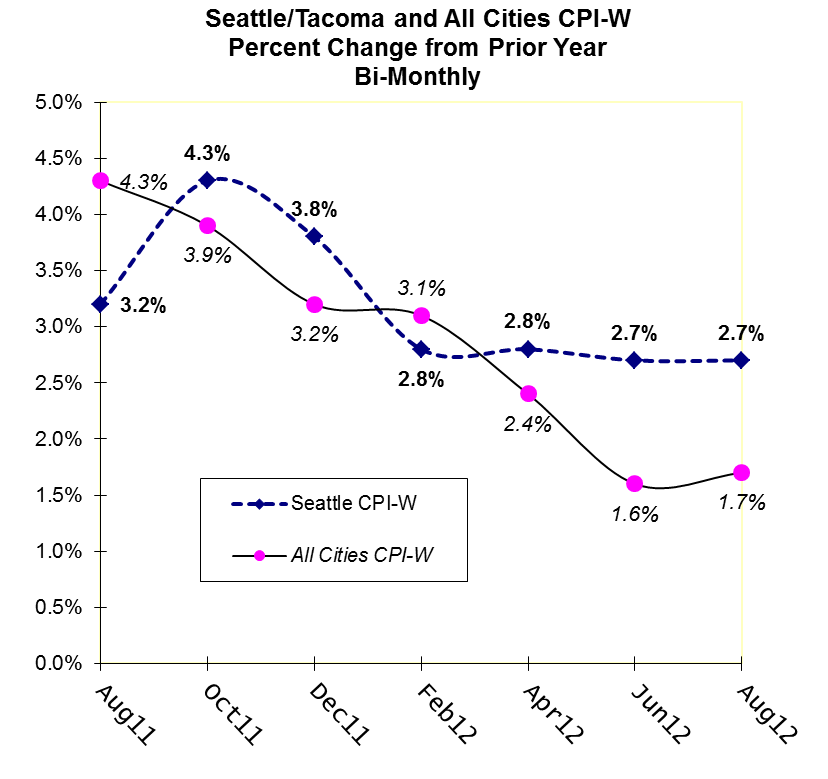
The Bureau of Labor Statistics just released CPI report that reports the August Seattle CPI-W at 2.7%, one full percentage point ahead of the All Cities number. These numbers are virtually identical to the last bimonthly (June) report in which the Seattle Index was reported at 2.7% and the all cities Index was reported at 1.6%. This chart shows the last 12 months of CPI-W data:
The Bureau of Labor Statistic’s release of national inflation numbers for July shows that national inflation was level for the month. On a 12 month basis, the All Cities CPI-U declined from 1.7%to 1.4 % and the All Cities CPI-W moved from 1.6% to 1.3%. The Seattle inflation numbers are reported bimonthly, with the bimonthly August numbers due out in mid-September. Economist took the report as an indication that the soft economy was keeping inflation in check. Economist James Marple explained: Inflation is on a clear downward trajectory. With an unemployment rate at 8.3 percent, weak economic growth, both domestically and globally, and a rising U.S. dollar, inflation is likely to drift lower over the coming months. However, most economists are also predicting that the current lull in inflation will not continue long. The current summer drought is expected to create a jump in food prices later this fall, pushing inflation higher.
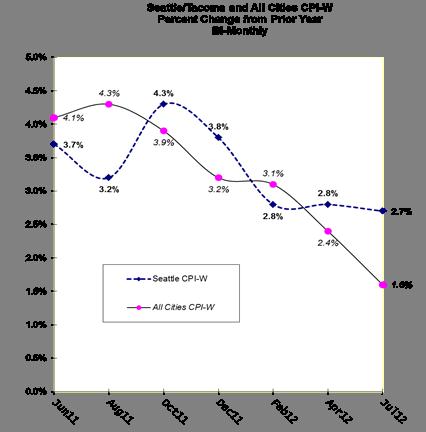
The Bureau of Labor Statistics has released its awaited June CPI report and it reveals that the National All-Cities index has moderated more than the Seattle index. The Seattle June CPI-W was reported at 2.7%, more than a point ahead of the June All Cities CPI-W which was reported at 1.6%. In both cases, these indices dropped significantly from last June when inflation was running near 4%. This chart shows the last 12 months of CPI-W data.